

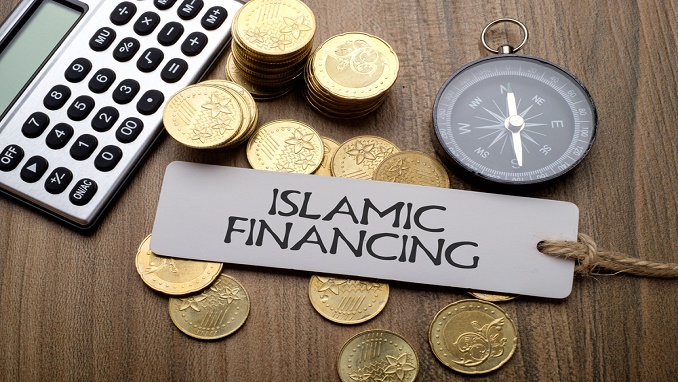

Islamic finance is available in 56 countries through 1,389 sharia-compliant companies that have total assets under management (AUM) of $2.4 trillion, according to a 2018 study from Thomson Reuters. In 2017, the market grew 11% and while recent expansion has been slower in core markets, such as the Gulf and south-east Asia, future trends are significantly rosier.
For example, Malaysia, the world’s largest market for Sukuk (Islamic bonds), is now opening up to retail investors. The growing emergence of fintech is also leading to digital-only Islamic banks, robo-advisors and digital wealth management services. This will see the industry make in-roads into areas including leasing finance for goods such as computers, factory equipment, and motor vehicles.
Impediments to growth often relate to incomplete legal and regulatory frameworks, which are needed to create the optimum environment for Islamic finance. Recent developments in countries including Indonesia, Malaysia and Brunei have sought to address the issue, in turn paving the way towards a more flexible future.
Malaysia’s Financial Sector Blueprint 2011-2020 was augmented by a five-year Islamic fund/wealth management initiative, rolled out in 2017, and is now well established.
Indonesia’s five-year roadmap for its own domestic Islamic banking industry includes new foreign ownership rules for Islamic banks and the requirement that conventional insurers spin off their takaful (Islamic insurance) operations.
In Brunei, the Monetary Authority of Brunei Darussalam’s financial sector blueprint (2016-2025) underscores that nation’s desire to facilitate further development of its Islamic finance industry.
While Islamic financial institutions are endeavoring to provide economically viable financing alternatives to the conventional global financial system, framed within the boundaries set by Sharia principles, it is worth noting that there are no underlying restrictions to their use in leasing finance.
For example, the core mechanisms in place need to ensure contracting parties share the risks of any venture amongst themselves, so if structured correctly, Islamic law allows for asset-based financing, more specifically known as Ijara. Literally translated as ‘to give something on rent’ or ‘providing services and goods temporarily for a wage’ Ijara is a term contained within Fiqh (Islamic jurisprudence)
In the case of automobile Ijara, for example, the customer and car owner – typically a bank, as the lion’s share of the industry (71% of AUM) are accounted for by Islamic banks – enter into a rental agreement for a period agreed at the time of the contract. The customer makes an initial security deposit, after which (when the lease period expires), they can either take ownership of the car via a separate sale transaction or return the car and take back the security deposit.
Similar flexibility in terms of credit requirements, contractual obligations and time frames offer scope to serve the growing market for vehicle subscription models. These are similar to products being rolled out by vehicle manufacturers and service providers throughout the world, even though those are not specifically designed to be Sharia-compliant.
Car leasing is allowed because the asset is defined at the outset in terms of who owns the vehicle, what the lease will cost and what the car will be worth at the end of the contract. Their structures permitted include Murabaha, a cost, plus sale contract with a deferred payment term.
As Kosta Georgiadis, director, financial advisory, Deloitte Middle East, points out:
“Another parallel that can be drawn is with that of a timeshare scheme for real estate, which is common in various parts of the world. Such a scheme may be Sharia compliant if there is a fair share in the risk and return amongst the scheme owners and promoters, as well as if the underlying real estate assets are operating in a Sharia-compliant manner. Usually, such schemes are funded by equity only, which in nature is a Sharia-compliant financing mechanism. Although we have not witnessed such a scheme here in the Middle East for vehicle ownership/usage, we do not foresee Sharia compliance as an issue for shared vehicle ownership.”
A case in point is Volvo Car Leasing, rolled out in Malaysia in June 2018. That initiative, while not overtly Islamic finance-based, is structured in such a way that it would be compliant for Sharia purposes. That is because at the end of the leasing agreement, which includes insurance, road tax, maintenance costs, as well as warranty, customers can either choose a new model to drive home, buy the car at market rate or simply return it to the supplier.
With ongoing initiatives in south-east Asia aimed at boosting Islamic finance, it is inevitable that opportunities will present themselves as the ecosystem continues to develop and expand. First movers among the Islamic banks and other financial institutions are likely to be the biggest beneficiaries. On the basis that vehicle subscription programmes are fully compliant with Sharia law, Europe may provide a useful pointer, going forward.
Putting this in context, by 2025-26, vehicle subscription programmes could account for nearly 10% of all new vehicle sales in the US and Europe, according to Frost & Sullivan, equivalent to 16 million vehicles and creating a business opportunity worth an estimated $100 billion.
Vehicle subscription services can readily exploit car sharing, rental, leasing, and outright purchase agreements, given their flexibility in terms of allowing customers to switch programmes and swap vehicles easily. Whether this particular form of flexibility will be inserted into the Islamic financing space in a significant way remains to be seen, however.
What is certain is that the market is destined for growth. For example, when the Indonesian government launched the National Committee for Sharia Finance (KNKS) in 2017 as part of a strategic move to make the world’s most populous Muslim nation a global hub for the Islamic finance industry, the Indonesian Islamic finance space comprised 12 general Sharia banks, 22 Sharia business units of conventional banks, 58 takaful operators and 163 Sharia people’s credit banks.
With a population of more than 260 million that is 87% Muslim, there is a significant opportunity for growth.
Source Asset Finance