


Less than a decade after its 2009 launch, India’s Aadhaar digital identity system has been adopted by 99 per cent of the country’s population, drawing hundreds of millions of previously unbanked people into the digital economy and the country’s financial system at large.
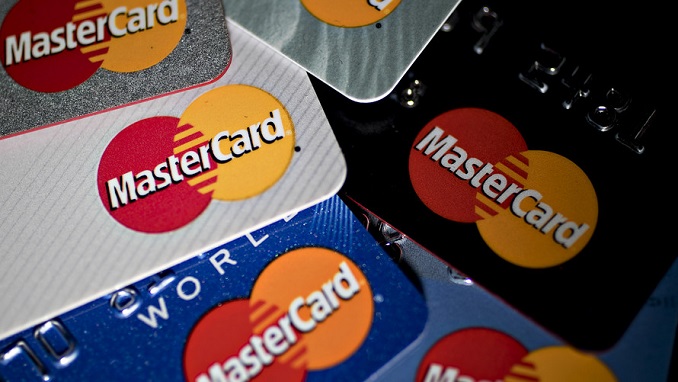
Now, Mastercard has unveiled a blueprint for repeating that feat the world over, while also liberating merchants and service providers from the manual process of validating prospective clients’ identity.
The idea is that the digital identity would substitute for the wodge of paperwork and official ID people currently need to do everything from opening an account with a utility company, signing up for an online payments service, hiring a car or renting an apartment.
“Identity as we well know is a big pain for everybody,” Mastercard president for cyber and intelligence solutions Ajay Bhalla told FintechFT. “This means that you can actually have a digital identity which can be put on a device and used anywhere in the world.”
As well as cutting out hassle and giving credentials to people who are currently locked out of the financial system, the scheme could also reduce fraud by making it harder to assume someone else’s identity (a big problem in some online payments systems).
Last week’s update centered on the principles of how the global digital identity would work, hitting all the right notes like inclusion (“everyone has a right to a digital identity”), ownership (“individuals own their identity and personal data”) and confidentiality.
Bhalla sees these values as critical to the system’s credibility, and therefore its adoption. Details on the logistics of its operations are fuzzier. Bhalla says that it is “envisaged” that banks and merchants “pay for it”, but Mastercard hasn’t “actually come up with any pricing models yet.”
“We’ve discussed this with our banks, with the merchants, with people in the gig economy, and there is a very clear expressed need,” said Bhalla. “We are very confident that once it’s rolled out we will get very wide embracing of this entire service.”
Derek White, global head of customer and client solutions at BBVA, told FintechFT that “lots of banks and fintechs are already working on solutions very similar” to what Mastercard is doing, including a BBVA-backed venture Covault, which facilitates “the creation and private exchange of secure digital identities.”
“What Mastercard has going for it is scale, the potential flexibility of its (digital identity) tokens to prove identity or just transactions, and its existing relationships,” White added. “What we have seen repeatedly in areas like finance-related technology is that massively scaled adoption is critical to any specific platform’s success.”
Mastercard works with 20,000 banks globally, and millions of merchants.
It’s not only merchants and banks who have to adopt the system, though; regular people need to get it and want it too. “It’s early days for consumers to understand the concepts of centralised ID management,” said Colin Walsh, chief executive of US digital challenger bank Varo Money. “Regulators will still need to get comfortable with it and there is likely to be a period of back-and-forth so that new technology does satisfy requirements.”
Indeed, regulators — and other instruments of the state — are likely to put the breaks on the digital identity systems long before the limits of technology are reached. In New Delhi, India’s Supreme Court last year ruled against plans to integrate mobile phone data in digital IDs, and blocked companies’ access to citizens’ biometric and demographic data on privacy grounds.
With $6bn a year of remittances flowing through its pipes, Seattle’s Remitly has already achieved a scale many fintechs can only dream of. Last week’s announcement of a partnership with Visa could take the remittances business to a whole new level, but Remitly’s chief executive is already eyeing even bigger things.
“We have over 1 million customers saying ‘we trust you with our remittances,” Remitly CEO Matt Oppenheimer told FintechFT. “I have a longer term vision . . . to say ‘how can we help those immigrants with a broader range of financial services needs’.”
Oppenheimer cited the challenges immigrants have with everything from opening bank accounts to getting loans as problems that Remitly could help solve, either on its own, or through partnerships.
Certainly immigrants seem to be liking Remitly’s core play of making it cheap and easy to send money from developed to developing countries. After initially focusing on the biggest corridors like USA to India, Remitly now offers its services across more than 700 of the developed to developing “corridor pairs”.
Oppenheimer attributed some of Remitly’s success to the sheer variety of payment methods it offers; you can send them to a bank account, a local store, or even get home deliveries.
“That’s where we really add value,” he said, adding that those kind of activities were “not a sweet spot” for banks.
The Visa deal opens up another avenue, and will ultimately make it possible to use Remitly to send money almost-instantly to anyone with a Visa debit card anywhere in the world, allowing Remitly to fight for an even bigger share of the $600bn a year annual remittances market.
“There’s a very large independent business to be built here,” said Oppenheimer, ruling out any interest in being bought by a bank. Remitly’s existing investors include Amazon founder Jeff Bezos, global internet and entertainment group Naspers as well as venture capital firms DFJ and DN Capital.
Source Financial Times