


Global trade is already dominated by the world’s major commodities and this shows no sign of changing or slowing down. But buyers and traders are increasingly calling for cleaner, greener commodities, not just to minimise environmental impact but also to bolster and secure clean supply chains.
The challenge to date, in achieving greater productivity and sustainability, has been the missing innovative financial mechanisms that fund a new way to farm.
This has been thrown into sharp focus in Brazil, where the booming soy sector is worth $40bn a year, and where the government recently announced a significant reduction in subsidised credit lines for farmers.
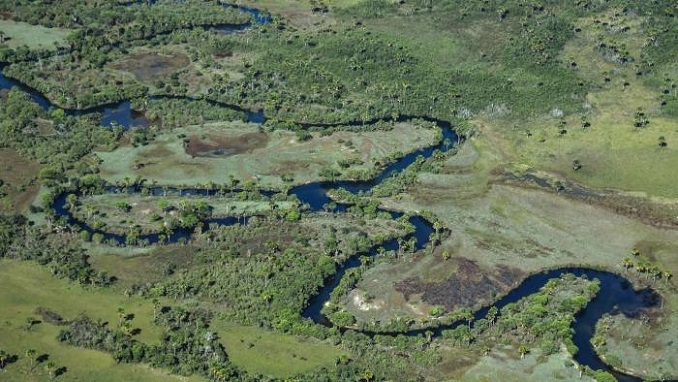
Rising demand for soy could result in the conversion of more than 6m hectares of Brazil’s Cerrado, or savannah, during the next 10 years.
Yet Brazil has more than 18m hectares of degraded pasture land across the Cerrado, which could be made available for soy production to spare existing grasslands and prevent greater levels of greenhouse gas emissions.
The process of converting degraded land to soy farming requires several years to reach full productivity and, crucially, significant investment in inputs such as fertilisers and infrastructure.
The market is finally recognising that there exists an enormous opportunity to step in and support farmers to make use of this available land and avoid clearing more of the Cerrado, while also minimising emissions from land conversion.
Leveraging investment through new mechanisms to support more responsible ways to produce soy, corn and other commodities can help green the entire value chain.
It is the hope this will get a contribution with the Responsible Commodities Facility, launched on July 4 with support from the UK government and the United Nations. We believe this is the world’s first green bonds scheme that finances farmers and producers who commit to using degraded land instead of expanding into existing grasslands.
The facility plans to issue $1bn in green bonds over the next four years, which is expected to result in 180m tonnes of responsible soy and corn, worth around $43bn in the first decade. The first $300m bond issuance is planned for the planting season of 2020. Producers, then, can make use of this new funding to expand soy production on to land previously cleared for grazing.
Not only does this avoid the need to convert virgin grasslands, it also helps to limit greenhouse gas emissions from agriculture. For farmers, the initiative will offer an important complement to official credit lines, at a moment when the Brazilian government has reduced the volume of subsidised agricultural finance.
Reducing deforestation will achieve almost 90 per cent of Brazil’s emission reduction target by 2030, and using already cleared land for soy production could help avoid emissions of more than 250Mt CO2e.
Finally, buyers can use a new Responsible Commodities Registry to guarantee the traceability and provenance of the commodity they are buying. With compliance to responsible soy production independently verified by third party companies, buyers can have confidence that their supply chain is sustainable.
There is already widespread agreement that deforestation linked to soy production must come down, with 50 civil society organisations and 150 consumer goods companies backing the Cerrado Manifesto to protect Brazil’s grasslands.
The market is now responding. Green investors can provide not only the financial support but the solution needed to help achieve responsible soy and corn production in Brazil.
Source Financial Times