

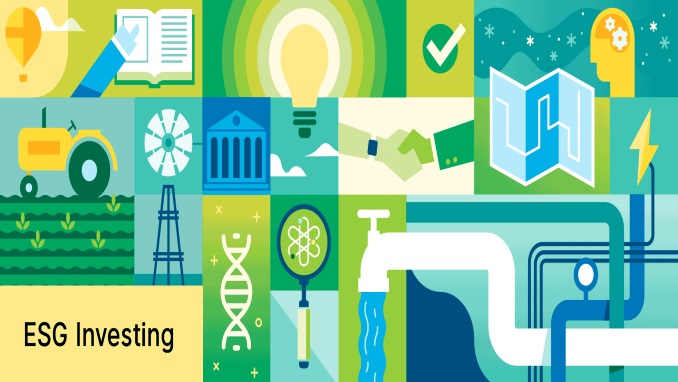

As individuals, companies and governments become increasingly alert to the risks of climate change, the environmental, social and governance policies of corporate and sovereign bond issuers have also become more heavily scrutinised.
Factors such as carbon emission levels, human rights and transparency around board diversity and executive pay are all examples of criteria that a debt issuer is judged on by investors for both credibility and creditworthiness.
“ESG integration is absolutely, completely mainstream,” claims Alexandra Basirov, head of sustainable finance for financial institutions at BNP Paribas, adding that financial market players care about these issues “because they recognise their own values and the materiality of climate change having an impact on their investments.”
If organisations do little to combine ESG factors into their plans, it “could impact their access to capital markets,” she says, underscoring the reputational importance placed on such integration.
However, not all bond issuers feel equally compelled to change. It is easier to assess and include ESG factors when looking at corporate debt compared to sovereign debt, says Will Oulton, global head of responsible investment at Sydney-based First State Investments.
“Corporates in sectors such as energy tend to have very clear and observable environment impacts,” he says. “For sovereigns it can be an inherently more complex exercise.”
In his experience, it is more difficult to pin down a government on its ESG criteria since there are a greater number of areas to tackle and quantify in a whole country compared to a company. He adds that countries’ ESG risk factors are more interlinked than companies’:
“A government’s effort to tackle environmental factors might have an unintended consequence on social outcomes.”
Other differences between the two types of bond issuers exist.
“Sovereigns tend to have [a] more limited incentive to respond to engagement on ESG issues, given bondholders are not necessarily considered priority stakeholders from a domestic political perspective,” says Mr Oulton.
That the sovereign debt sector has been lagging behind is a view recognised by the UN in a report released earlier this year: “Despite its size and importance, the sovereign debt market has been the subject of less systematic ESG consideration than other investment asset classes.”
However, Mr Oulton notes a recent change in tone, arising from greater social awareness, gender equality and climate activism: “It is becoming more and more commonplace to hear investors challenging sovereign issuers.”
Pressure is also mounting on governments to increase their issuance of green bonds, which are used to support specific environmental projects. In May, asset managers including Columbia Threadneedle and Insight Investment, which manages £648bn, wrote to UK ministers urging them to issue “green gilts”. Poland, France and Belgium have all issued sovereign green debt since 2016.
For investors wishing to understand the extent of ESG integration in debt, rating agencies play a crucial role. “Ratings have changed as a result of ESG,” says Michael Wilkins, managing director of sustainable finance at S&P Global Ratings.
S&P evaluates corporate and sovereign issuers according to different criteria, therefore acknowledging the differences between the two. Mr Wilkins says: “Every different sector, consumer product, pharmaceuticals, utilities, will have [its] own specific levers to make that adjustment.”
Yet challenges remain for both. The Task Force on Climate-related Financial Disclosures, chaired by businessman Michael Bloomberg, aims to develop climate-related financial risk disclosures for use by companies. However, Ms Basirov says:
“The challenges which [we] have are around disclosure. The TCFD is not mandatory for anyone.”
Other hurdles remain.
“There’s no homogenous way to measure factors of ESG,” Ms Basirov says. This is an obstacle as companies, governments and rating agencies may be assessing ESG factors in markedly different ways, leaving investors with different results to ponder.
Divergent opinions also exist on how much ESG integration to commit to. Mr Wilkins says that some market players think that there should be full ESG integration across the board, while others believe that ratings should reflect purely credit factors.
“[The two views] puts us in a challenging position [because] we want to provide as much transparency as possible,” he says.
For sovereign bond investors, research by Hermes Investment Management shows that the most ESG-friendly countries are deemed less likely to default. Of the 59 countries analysed, those with the best ESG scores had the lowest credit default swap spreads, a measure of the likelihood that a country will default on its debt.
Source Financial Times