


The European Parliament and the European Council of Ministers have reached agreement on the creation of a so-called green list – a classification system for sustainable economic activities.
Investors can use the list when investing in projects and economic activities that make a substantial positive impact on the climate and the environment.
It is intended to help scale up private and public investments to finance the transition to a climate-neutral and green economy, redirecting capital to economic activities and projects that are truly sustainable.
European Commission executive vice-president Valdis Dombrovskis called the framework “a game-changer in terms of tackling climate change because it will enable billions in green investments to flow.”
“Investors and industry will for the first time have a definition of what is green, which will give a real boost to sustainable investments. That will be crucial for the European Green Deal to become a reality,” said Dombrovskis.
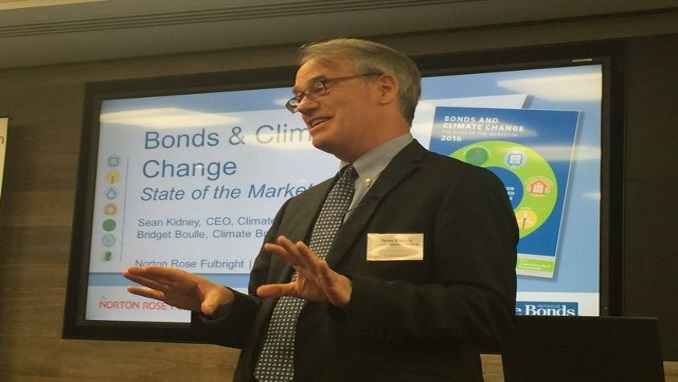
Sean Kidney of Climate Bonds Initiative, an international NGO working to mobilise debt capital markets for climate solutions, says the EU taxonomy (as its formally known) will underpin a whole range of European initiatives. Kidney is part of an EU technical expert group (TEG) which developed the list.
“Every large investment is going to have to report on climate risk. And if they want to, companies are going to have to report on how sustainable they are. And they all will. They will have to use the taxonomy. You won’t be allowed to do anything otherwise. Everyone wants to be seen as sustainable,” Kidney tells The Fifth Estate.
“Also, the European Banking Authority will have to use it, and so will corporates. This system of classification should lead to common global descriptors of green and sustainable activities while acknowledging regional and country level specificities,” he says.
The EU taxonomy is based on last year’s IPCC and International Energy Authority reports.
“It contains some surprises,” says Kidney. “In Europe we have to electrify everything, so electric grids are in there, and firstly, all new coal mines are out. Hydrogen is in. On transport – we’ve got five years to get to electric vehicles. Biogas has to get out of transport. Why? Because they want to use the biofuels for aviation to phase out kerosene.”
“In areas where energy is complicated, there are caveats. For example, all biofeed stocks will be certified so there will be no deforestation or sidelining of food production in agriculture. As aviation biofuel kicks in, kerosene will phase out.
“Gas production is out – the IEA said that. The IPCC said that we have to have a 50 per cent reduction in emissions in 10 years or we’re toast – like parts of Australia nearly are. No new fossil fuel can qualify for investment,” Kidney went on. “So the Adani mine is inconsistent with this. But it’s like the drugs trade; we can’t bring in the military helicopters to stop the mines. We have to tackle the demand. So we have to work on reducing demand in Beijing, in Seoul and so on.”
However, there is another criterion that nuclear will be judged by: does it do harm? There are significant issues around disposal and decommissioning of nuclear plants.
“We have asked the European Commission to have a proper enquiry to figure out what to do about new nuclear, but it won’t start till 2021,” said Kidney.
The taxonomy covers 67 areas of society. Under the list, all new buildings must be zero carbon by 2030.
“All refurbs must keep improving until they are zero carbon by 2050. This will be very recognisable to Australian investors,” says Kidney. “The top 15 per cent of any market will qualify in terms of emissions performance of buildings. In Australia, we have the NABERS scheme that measures emissions, and issuers are using this methodology in Europe.”
However, he says it’s going to be tougher in Europe for new buildings than it is in Australia.
“In Europe, all public buildings from next year will have to meet the near zero standard and the following year all commercial buildings will. Regulations are driving this market, but we say you have to be 20 per cent better than that in order to qualify. We are being really ambitious,” said Kidney. “Even the European Banking Federation is backing this. It will have a flow on effect on every market in the world because investors report to their stakeholders and all around the world they will have to report on what they’re doing. Any that do not invest in compliant activities will need to say so. They can also make a case to argue if or how they are sustainable. Large public-interest companies with more than 500 employees will have to disclose how and to what extent their activities are associated with environmentally sustainable economic activities.”
This classification system can also be used on a voluntary basis by any other body.
The EU hopes the taxonomy will help companies raise finance for sustainable activities by encouraging them to publish the percentage of their turnover or investments that is in line with the “green list” of environmentally sustainable activities.
The TEG is also devising recommendations for the development of an EU green bond standard, to make it easier to issue and compare these bonds. Cities and companies can issue them to raise finance for sustainable projects. The rules define what is sustainable.
It is also working on technical requirements for the EU Climate Transition and EU Paris-aligned benchmarks, to help put an end to greenwashing.
Source The Fifth Estate