

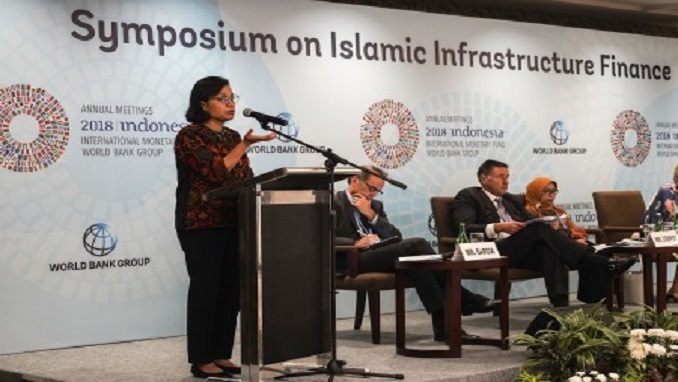

Economies within the Association of Southeast Asian Nations (ASEAN) have “ripe foundations” for the Islamic banking sector to grow, but government commitment is needed for it to really take off. Moody’s Investors Services says ASEAN is ripe for Islamic banking, but various challenges are evident even though authorities are putting measures in place to develop this sector.
“Currently, Malaysia and Indonesia are actively making regulatory efforts to nurture Islamic banking and this will drive growth in a region that has a significant Muslim population. However, translating these favorable conditions into actual growth requires government commitment to develop the Islamic banking sector and that is why the efforts being made by Malaysia and Indonesia are important,” said Simon Chen, Moody’s vice president and senior analyst.
In the bloc, current levels of Islamic financing penetration are generally low because most governments have not yet actively sought to develop the sector, resulting in low levels of public awareness of Islamic banking services and a lack of incentive for banks to devote resources to develop them, Moody’s wrote in a report titled Islamic Banking – Asean: Regulatory Push Will Drive Sector Growth, Building on Sound Foundation.
Mr Chen noted that the authorities – especially those in Malaysia and Indonesia – are stepping up their regulatory efforts to pursue the expansion of Islamic banking services, driving growth in a region with a significant Muslim population.
It noted that Malaysia aimed to boost its share of Islamic banking assets to 40 percent by 2020 from 32 percent at the end of August 2018, while Indonesia was seeking to increase it to 15 percent by 2023 from 6 percent at the end of July 2018.
Robust economic environments and banks’ sound solvency and liquidity would help conventional banking groups lead the growth of Islamic banking in the region like in Malaysia and Indonesia, according to Moody’s.
Source The Jakarta Post