

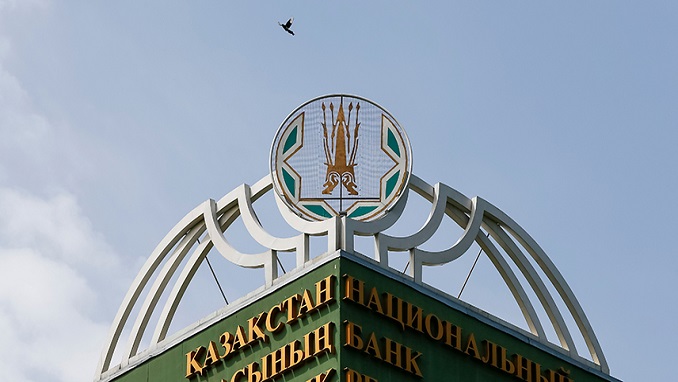

Despite the attempts of the government of Kazakhstan to make its Islamic finance market more attractive, Islamic products are still rarely used in Kazakhstan.
Currently, according to the National Bank of Kazakhstan, the share of Islamic banking assets in Kazakhstan represents an insignificant part of the total assets of the banking sector: 0.21% (a year earlier the share was 0.16%). According to the Astana International Financial Center (AIFC), the target to achieve by 2025 is 5–7%.
The government of Kazakhstan nevertheless is continuing its efforts to create a favorable legislative and regulatory framework for the development of Islamic finance so that Kazakhstan can become a regional hub for Islamic finance.
Review of 2019
The AIFC, recently established based on the model of the Dubai International Financial Centre, aims to become the most attractive platform for the development of Islamic finance in the region.
In order to ensure investors that the legal regime of Islamic finance within the AIFC is fully Shariah compliant, the AIFC established the International Expert Council for Islamic Finance (International Council) and the Central Council of the AIFC on the principles of Islamic finance (Central Council).
The tasks of the International Council are examining regulatory documents in the sphere of Islamic finance, assisting in attracting investors and leading Islamic financial institutions to the platform of the AIFC, as well as providing advice on the development strategy and promotion of the AIFC as a center of Islamic finance.
The activities of the Central Council are aimed at reviewing and approving the AIFC policy, as well as providing advice on compliance with the principles of Islamic finance. To ensure the effective work of these bodies, the best international experts in the Islamic finance field were invited.
Preview of 2020
The Kazakhstan market is expected to become more open to foreign banks including Islamic banks as one of the conditions for the admission of Kazakhstan into the World Trade Organization is permitting foreign banks to open their branches within the territory of Kazakhstan (currently, foreign banks are allowed to establish subsidiaries in Kazakhstan but are prohibited from opening branches).
The relevant amendments have already been introduced to Kazakh banking legislation so that foreign banks (including Islamic banks) will be able to open their branches in Kazakhstan starting from the 16th December 2020.
According to the Ministry of Finance, Kazakhstan plans to place Sukuk (Islamic securities) on the AIFC exchange in the next two years. The placement of sovereign Sukuk will be a huge step forward in the development of Islamic finance in Kazakhstan and a sign to investors that the government of Kazakhstan is particularly interested in Islamic finance.
The growth of financing of the private sector by Islamic organizations in 2020 is also expected. According to Islamic Corporation for the Development of the Private Sector (ICD) CEO and General Manager Ayman Sejiny, the ICD is seeking to advance the private sector in Central Asia through funding agricultural and transport infrastructure projects. In addition to that, the ICD is planning to start with an introduction of issuing (Sukuk) for approximately US$100 million.
Conclusion
Kazakhstan announced an ambitious goal to make the AIFC a regional hub for Islamic finance and continues to actively work toward this goal. It is now a good time for Islamic companies to enter the Kazakhstan market as the AIFC and the government of Kazakhstan are open to cooperation and new players are very much welcome to the market.
Source Mondaq