

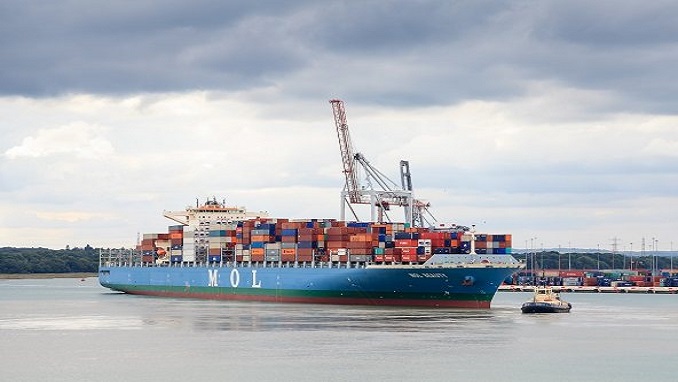

The Japanese logistics company, which recently merged into the new ocean carrier Ocean Network Express, has targeted the technologies as part of its commitment to meeting the International Maritime Organisation’s (IMO) requirements.
New legislation from the worldwide regulation authority targetted will aim to ensure that shipping companies cap their sulphur emissions at 0.5% from 2020. The technologies MOL plans to develop from the proceeds of its green bonds are as follows: Ballast water treatment systems, SOx scrubbers, LNG-fueled vessel, LNG bunkering vessels and New Propeller Boss Cap Fins (PBCF) .
The initiative will also contribute to the ‘Wind Challenger Plan’, a joint research project by MOL and Tokyo University to cut CO2 emissions by using propelled sails on containerships. It hopes to launch a sail-fixed vessel by 2020.
MOL’s ‘green bonds’ will be called ‘MOL Blue Ocean Environmental Bonds,’ and this is the first time that ‘green bonds’ will be issued in Japan to individual investors, and they will be made available through a public offering in Japan’s domestic market. MOL’s statement read:
“MOL established the MOL Group Environmental Vision 2030 in April 2017, and designated environment-related and emission-free businesses as core activities in its “Rolling Plan 2018” management plan.
“The MOL Group also views responses to stricter environmental regulations and activities to reduce its environmental impact as opportunities to create new businesses and diversify its business portfolio, and address new challenges in technical innovation.”
Source Port Technology