

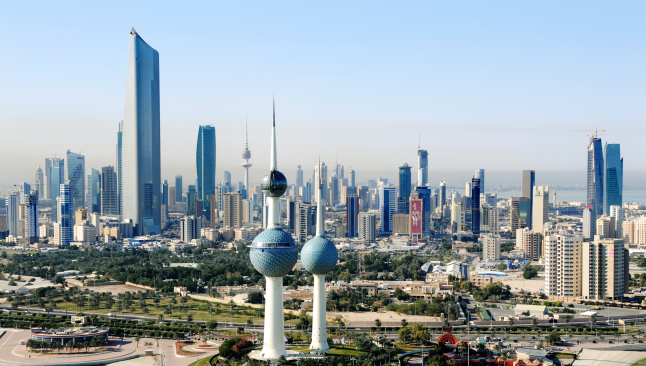

Kuwait is occupying its rightful place in regional business, despite issues the country needs to face to achieve its full potential according to Hadi Khatib at AMEInfo. Kuwait has the world’s 4th largest oil reserves, and is building a $600bn wealth fund, spending to maximize returns and developing a solid financial infrastructure.
Reforms delayed but coming
Following the 2016 deficit, Kuwait introduced subsidy cuts on oil, water, and electricity which dampened confidence in the Kuwaitis. This resulted in inflation of 3.3% and rising living costs for the lower income population. Thus these fiscal reforms have largely been suspended.
Kuwait parliament is increasingly sensitive to burdens on consumer budgets, postponing the imposition of the 5% VAT until 2021. Excise duties on tobacco, energy drinks, and carbonated drinks are to be voted upon in October and are expected to be introduced sooner than 2021.
Kuwait’s new business landscape
According to the Financial Times, Kuwait hopes to push ahead with reforms to diversify away from oil. The country’s non-oil economy grew by 3.3% in 2017, up 2% from the previous year.
Kuwait’s parliament passed its budget for the 2018/2019 fiscal year in June that included a significant spending increase despite its sizeable fiscal deficit. Kuwait’s economic growth has been driven by the non-oil sector in Q1 2018, which expanded 2.7% YOY.
Bloomberg notes that Kuwait’s inclusion in FTSE’s secondary emerging-market index is expected to attract passive inflows of around $800 million in the second half of 2018.
Private sector support
Kuwait has earmarked $100bn for infrastructure investment and is partnering with the business community.
FT also notes that Kuwait is opening up to foreign investors committed to creating jobs for Kuwaiti nationals, who make up only 21% of workers in the private sector.
The Northern Gulf Gateway mega-city plan is expected to add as much as $220bn to the country’s GDP and aims to attract $200bn in foreign direct investment, opening the doors for investment from American, European, Chinese and Asian investors.
The development plans to create as many as 400,000 jobs, as well as attract between three and five million visitors annually by opening up new investment opportunities in the tourism, hospitality and leisure sectors.
The total amount allocated for providing salaries to the employees of the government sector will increase to KD 24 billion ($79bn) after 2025.
“The coming generations understand that their future cannot be built in the same old way, and you will see more movement into the private sector,” says Khalid Mahdi, Secretary-General of Kuwait’s Supreme Council for Planning and Development.
Good finances
Capital markets reform, and the country’s recent addition to the FTSE Russell emerging markets index, indicate banks expect a significant increase in trading and financing activities.
Net profits at the 2nd biggest lender, Kuwait Finance House, enjoyed a 16% rise in net profits.
Moreover, Kuwait’s Ahli United Bank CEO said, “There are many reasons to be optimistic about the future, given the growth in the economy and more favorable oil price.”
HSBC’s chief executive in Kuwait expects the country’s inclusion in the FTSE Russell index to drive about $1bn into the market in the three months after it joins the index.
The growing economy has impacted the World Happiness Report, ranking Kuwait 45/156 countries with a score of 6.083 in 2018. The GCC nation ranked 34/117 countries with a score of 6.207 in the happiness ranking for resident expats.