

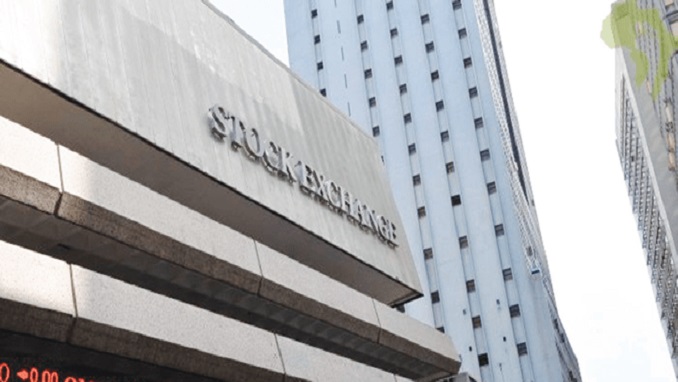

Expectations by experts and market observers in the Nigerian capital market, that transactions in equities will sustain the rally witnessed in 2017 did not materialize, as the activities in the market – safe for the first half of the year- remained on the downturn following sell offs.
The transactions on the Nigerian Stock Exchange (NSE), which was vibrant during the first quarter of the year, took a different turn from the second quarter, as low sentiment in the market worsened following upset in the financial market arising from insecurities, build up to 2019 elections, among others.
The nation’s stock market, a barometer that measures the economy, as at the close of trading last Friday, ended with a cumulative Year-to-Date (YTD) returns on investments in equities during the year at a loss of -19.53 per cent.
Available statistics to New Telegraph showed that activities on the Exchange, which opened the trading year at N13.609 trillion in market capitalisation and 38,243.19 in index at the beginning of trading on January 2, 2018, closed on December 20, 2018 at N11.20 trillion and 30,773.64 index points, translating to a year- to-date loss of about N2.369 trillion or -19.53 per cent year-to-date.
Financial analysts believed some of these factors sent a shock wave to both local and foreign investors and created uncertainty in the investment environment, which led to retreat of bargain hunters. Even impressive earnings being posted by some quoted companies with promises of dividend pay-out could not rescue the stock market from near limbo, as sell pressure continued unabated.
One of the major activities witnessed by the Exchange within the year was the debut of green bond. The Debt Management Office (DMO) had last January announced that the debut Sovereign Green Bond offered to the general public in December, 2017 was well received by a wide range of investors.
The DMO said in a statement released at the close of the Offer that the total subscription received was N10.791 billion compared to the N10.69 billion offered.
Among the investors who subscribed to the Green Bond were banks, pension funds, asset managers and retail investors. The DMO had offered N10.69 billion Sovereign Green Bond for a Tenor of 5 years and Coupon of 13.48 per cent.
The Debt Office said it was pleased with the strong interest shown by Investors, adding that it shows investors’ interest in new products and support for the objective behind the issuance of Bond, which is to invest in projects that will contribute to preserving the environment. It also shows support for the Paris Agreement on the Climate, which Nigeria had endorsed.
However, the Securities and Exchange Commission of Nigeria (SEC), at the last quarter of the year officially launched the Green Bonds Issuance Rules. Following a series of engagements with stakeholders and Capital Market Operators, the SEC rolled out its rules on Green Bonds on October 12, 2018.
The SEC had collaborated on several occasions with the Green Bonds Market Development Programme, a programme supported by the Climate Bonds Initiative (CBI), the FMDQ OTC Securities Exchange (FMDQ) and the Financial Sector Deepening Africa (FSD Africa) to support the development of a Non-Sovereign Green Bond market in Nigeria.
The programme provides training for regulators, investors and intermediaries on Green Bonds as part of its efforts to create an enabling environment for issuers and other stakeholders, to take advantage of the tremendous opportunities that Green Bonds offer.
Source New Telegraph