

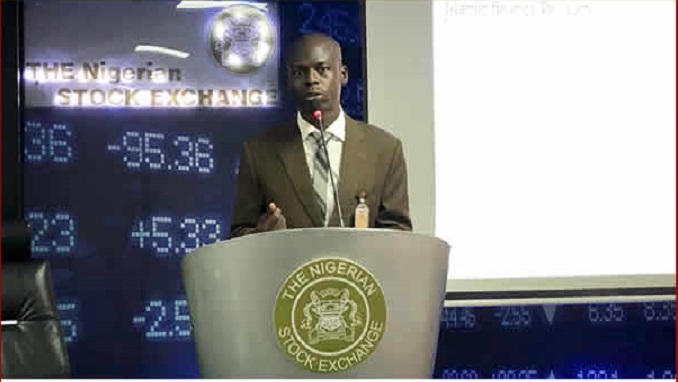

At the third edition of the Traders, Investors And Analysts (TIA) in collaboration with the Nigerian Stock Exchange, Dr Aliyu Dahiru Muhammad a Senior lecturer Deputy Director, Training and Linkage at the International Institute of Islamic Banking and Finance, Bayero University Kano, engaged stakeholders on the topic Nigeria “Islamic Financing: Tools For Developmental Financing.”
According to him, “Islamic Finance is not only for Muslims, but an instrument used to improve financial services in Nigeria.”
Speaking further, he said Islamic finance is a historic and long established financial transaction system involving all forms of economic assets that complies with the Islamic law (Shariah) principles and guided by the Islamic economic principles. He said the overarching objective of the system is based on the concept of fair distribution of resources and social justice.
Speaking on the invention of Islamic finance in Nigeria, he asserted that the system has not gained global attention until the last three decades when income inequalities among countries grew to an unprecedented dimension.
Giving an overview on the report from the World Bank in 2017, he stated that “as the growth of Islamic finance is strictly determined by real economic growth, when an Islamic bank engages in investment activity, the banks engages directly in risk taking through trade, leasing and productive investment in agriculture, industry and services.”
He further stressed that the inherent structure of the Islamic banking system and its link to the real economy makes it a stable financing system. He cited, Minsky (1986) who described the conventional system as endogenously unstable evolving from temporary stability to period of crises.
Dr. Dahiru highlighted the four components in Islamic finance which include: Capital Market, Banking sector, Insurance sector and Islamic social finance.
He also listed some key principles of Islamic Banking and Finance, which include prohibition of interest [riba], which means an excess or increase on loan transaction; Avoidance of gharar; Proscription against selling assets without first owning them (short sales); Tying return with risk; Discouragement of borrowing without necessity; Extending repayment time for debtors in distressed situations; Encouragement of sharing and cooperation etc.; Investments relating to alcohol, drugs, gambling, weapons, or other activities prohibited by shariah are not permitted.
Speaking further, Dr. Dahiru asserted that Islamic banking had far-reaching implications for finance and economic development in the globe, through the following outcomes. Islamic banks were largely insulated from the 2008 financial crises, because of their highly regulated operational environment guided by shariah principles.
According to IMF, the conservative nature of Islamic Finance is what immunizes it from the crisis. With its in-built principles that support financial stability, inclusiveness and economic development, Islamic finance lends itself well to catalyzing and promoting real economic (MIFC,2014).
He stressed that principles of Islamic finance also include being an equity-based, asset-backed, ethical, sustainable, environmentally and socially-responsible type of financing which promotes risk sharing, connects the financial sector with the real economy, and emphasizes financial inclusion and social welfare in the economy.
He added that Islamic finance is prone to sustainable growth, development and wealth sharing in the society.
Dr Dahiru Mohammed re-emphasized the need for Nigeria to take the opportunity in the committee of nations, to become the hub of Islamic finance at least in Africa and the Sukuk Federal Government of Nigeria Project is an evidence on ground.
Source ProShare