


Islamic finance is seen as an alternative borrowing approach that is firmly focused on morality and religion. Islamic commercial financing is business financing carried out following the rules of the Islamic holy book, Qu’ran.
In the period from 1950-1970, the idea of a set of rules for Islamic finance was introduced as a response to west economies’ growing influence. Trade transactions can be either financed on a loan or a participatory basis in Islamic trade finance.
The loan shall include the delay in the price or the delivery of goods purchased. Participatory financing involves financial participation in the profits and losses generated by the reselling or putting off the financed goods into a production process generating income.
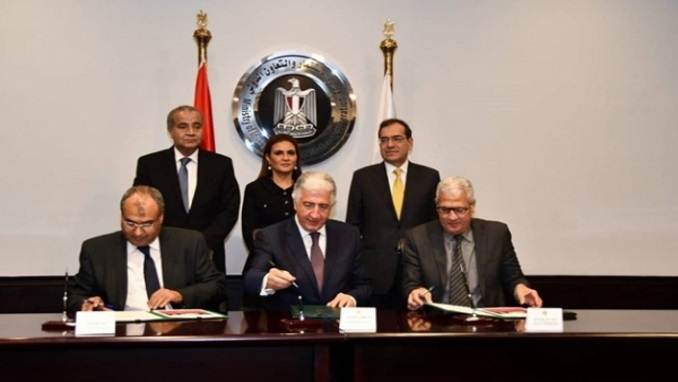
In 2020, Egypt’s Ministries of Petroleum and Supply said Wednesday, the International Islamic Trade Finance Corporation will provide $1.1 billion to assist Egypt in importing petroleum products and basic products.
The funds form part of an agreement signed in January 2018 between Egypt and the ITFC of $3 billion. Last year, acute foreign currency shortages led to delays in certain payments to global suppliers by the General Authority for Supply Goods (GASC).
The financing then guaranteed that the state buyer could use dollars for payment in some of its global buying offers. As part of a Bread Subsidy program on which many of the nearly 100 million Egyptians rely, Cairo pays about $1.5 billion annually for food.
Egypt is the biggest importer of wheat worldwide.
Supply Minister Ali Moselhy said in a statement that he had not specified which portion of the money would be allocated for the purchases of wheat, that this arrangement is a genuine collaboration with the International Islamic Trade Finance Corporation to supply people with basic goods.
Hani Salem Sonbol, the ITFC CEO, said the deal would also help the UN Industrial Development Organisation’s Better Cotton Initiative.
Source Industry Global News 24