

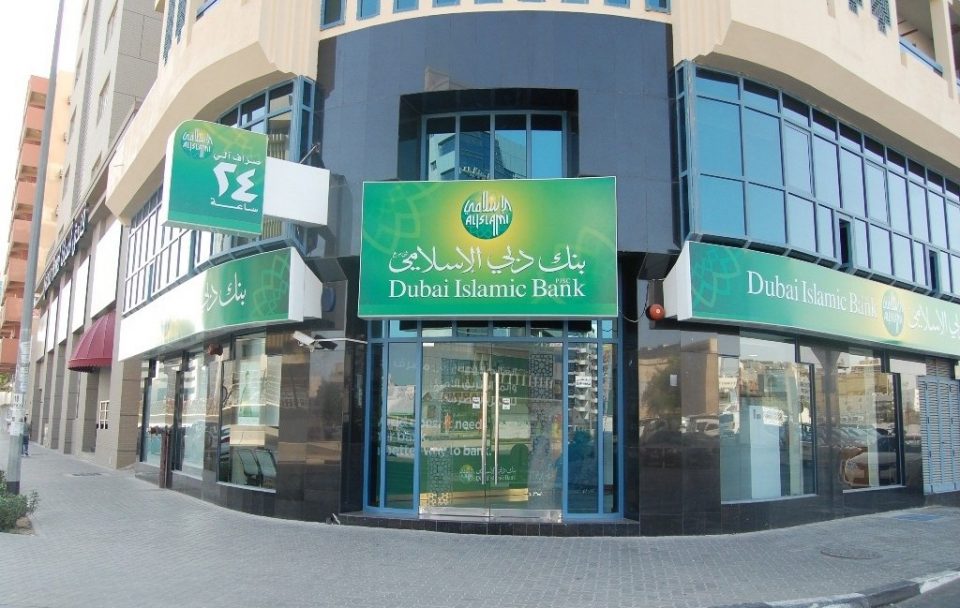

Could Dubai Islamic Bank P.J.S.C. be an attractive dividend share to own for the long haul? Investors are often drawn to strong companies with the idea of reinvesting the dividends. Yet sometimes, investors buy a popular dividend stock because of its yield, and then lose money if the company’s dividend doesn’t live up to expectations.
In this case, Dubai Islamic Bank P.J.S.C likely looks attractive to investors, given its 9.1% dividend yield and a payment history of over ten years. We’d guess that plenty of investors have purchased it for the income. When buying stocks for their dividends, you should always run through the checks below, to see if the dividend looks sustainable.
Companies (usually) pay dividends out of their earnings. If a company is paying more than it earns, the dividend might have to be cut. Comparing dividend payments to a company’s net profit after tax is a simple way of reality-checking whether a dividend is sustainable.
In the last year, Dubai Islamic Bank P.J.S.C paid out 62% of its profit as dividends. This is a fairly normal payout ratio among most businesses. It allows a higher dividend to be paid to shareholders, but does limit the capital retained in the business – which could be good or bad.
From the perspective of an income investor who wants to earn dividends for many years, there is not much point buying a stock if its dividend is regularly cut or is not reliable.
For the purpose of this article, we only scrutinise the last decade of Dubai Islamic Bank P.J.S.C’s dividend payments. The dividend has been cut on at least one occasion historically. During the past 10-year period, the first annual payment was د.إ0.1 in 2010, compared to د.إ0.3 last year.
Dividends per share have grown at approximately 9.4% per year over this time. The growth in dividends has not been linear, but the CAGR is a decent approximation of the rate of change over this time frame.
A reasonable rate of dividend growth is good to see, but we’re wary that the dividend history is not as solid as we’d like, having been cut at least once.
With a relatively unstable dividend, it’s even more important to see if earnings per share (EPS) are growing. Why take the risk of a dividend getting cut, unless there’s a good chance of bigger dividends in future?
While there may be fluctuations in the past, Dubai Islamic Bank P.J.S.C’s earnings per share have basically not grown from where they were five years ago. Over the long term, steady earnings per share is a risk as the value of the dividends can be reduced by inflation.
Dividend investors should always want to know if a) a company’s dividends are affordable, b) if there is a track record of consistent payments, and c) if the dividend is capable of growing.
Dubai Islamic Bank P.J.S.C’s payout ratio is within normal bounds. Earnings per share are down, and Dubai Islamic Bank P.J.S.C’s dividend has been cut at least once in the past, which is disappointing.
To conclude, we’ve spotted a couple of potential concerns with Dubai Islamic Bank P.J.S.C that may make it less than ideal candidate for dividend investors.
Investors generally tend to favour companies with a consistent, stable dividend policy as opposed to those operating an irregular one. Still, investors need to consider a host of other factors, apart from dividend payments, when analysing a company.
For example, we’ve identified 3 warning signs for Dubai Islamic Bank P.J.S.C (1 doesn’t sit too well with us!) that you should be aware of before investing.
Source Simply Wall Street