

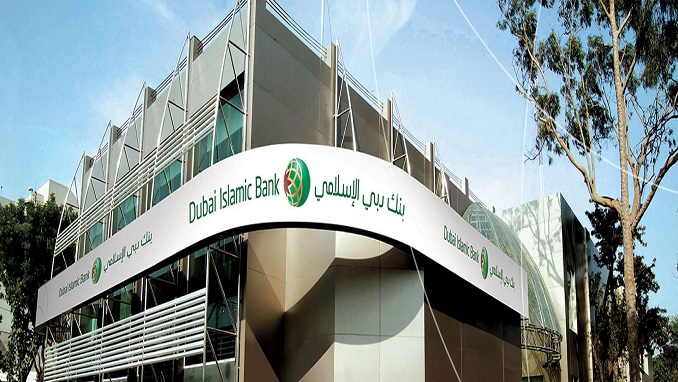

The Dubai Islamic Bank (DIB), the largest Islamic bank in the United Arab Emirates, announced on Thursday a net profit of Dh 1.1 billion for the first quarter of 2020, an 18 percent decrease from the previous year of 1, 35 billion corresponds to reported in the first quarter of 2019.
The bank’s general meeting on April 29 approved the increase in the foreign ownership limit from 25 percent to 40 percent.
The bank said the first quarter profitability had been achieved despite the bank’s conscious, conservative and prudent approach to creating additional reserves and buffers of nearly Dh 1.5 billion.
The bank said it focused on exercising caution and building provisions to ensure adequate cushioning to protect the bank’s financial position from the expected impact of the COVID-19 pandemic, oil price volatility and the low interest rate environment.
“The Covid 19 pandemic will create significant headwinds, forcing our strategies to rethink and recalibrate. The growth or at least the growth quantum is certainly influenced. Our focus will be more on protecting and maintaining business continuity and ensuring that long-term returns are available to everyone involved,” said Dr. Adnan Chilwan, Chief Executive Officer of the Dubai Islamic Bank Group.
DIB’s total assets now rose by 19 percent to Dh 276 billion at the end of 2019. Funding and Sukuk investments rose 17 percent to nearly 216 billion Dh. This includes consumer finance of Dh 52 billion and corporate finance of Dh 133 billion.
Customer deposits of Dh 159 billion in the first quarter of 2019 and Dh 164 billion at the end of 2019 were almost Dh 200 billion, a growth of 26 percent over the previous year and 22 percent since the beginning of the year.
The current account and savings account (CASA) deposits now amount to Dh 73.3 billion, compared to Dh 54.8 billion at the end of 2019. This currently corresponds to around 37 percent of customer deposits.
After the consolidation of Noor Bank, the non-performing finance ratio (NPF) and the impaired financing ratio were 4.3 percent and 4.1 percent, respectively. The slight increase in quotas is due to the current macroeconomic situation. Cash coverage was 100 percent, and total coverage including collateral at discounted value reached 138 percent.
“We took a very conservative approach to building delivery this quarter to ensure coverage and protection from the impact on the quality of assets that result from the current environment,” said Dr. Chilwan.
DIB’s net funding ratio at the end of the first quarter was 90 percent, which means sufficient liquidity. The equity ratios remain healthy with a CAR of 16.5 percent and a CET 1 ratio of 12.1 percent. Despite the loose capital requirements due to the Covid 19 outbreak, the bank continues to have healthy capital ratios above regulatory thresholds.
Source News Herder