


Kuwait’s inclusion in the FTSE Russell Emerging Markets Index on Monday is expected to attract $1 billion of passive inflows to its capital markets, boosting liquidity and placing the country firmly on the map for foreign investors, according to an article published in The National.
“This is another important watershed moment and a positive step for the region’s transition into mainstream emerging market investment,” said Salah Shamma, head of MENA investment at Franklin Templeton. “Capital market developments like this make the region difficult to bypass from an investor point of view.”
Kuwaiti stocks entering the index will be given 50 per cent of their weightings this month and the remaining 50 per cent in December. Kuwait will have a 0.51 per cent weighing in the index.
A total of 12 companies joined the benchmark on Monday, including Kuwait Finance House, National Bank of Kuwait and Agility.
Since FTSE announced Kuwait’s inclusion in March, stocks have outperformed their GCC peers. Net foreign flows totaling $264 million compared to $147m to Saudi Arabia.
“This highlights the increased interest in the Kuwaiti market, which offers a safe haven within a volatile emerging market backdrop,” Mr Shamma said. “We believe we have barely scratched the surface in terms of liquidity.”
Capital flows were further boosted by another index provider MSCI, which announced in June that it will upgrade Kuwait to emerging market status next year.
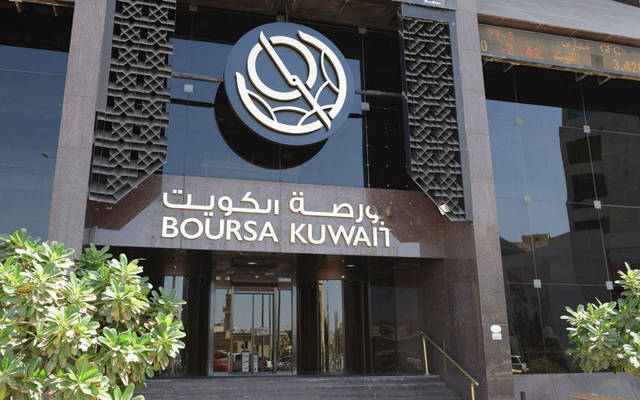
Boursa Kuwait, the $283bn stock exchange, is up more than 10 per cent so far this year on the anticipation of inclusion in the gauge. The country was put on MSCI’s watchlist in June and analysts said the country has met most of the criteria set by the index provider.
The inclusion, which would be effective from May 2020 at the earliest, should result in another $2bn of passive inflows. Passive investors track indexes and do not pick stocks as opposed to active investors.
“Kuwait’s inclusion in mainstream EM indices like FTSE and, likely next year, MSCI, has been driving foreign inflows to the equity market since the autumn of 2017 and that process has several months left to run, which is positive for the market,” said Hasnain Malik, head of frontier markets strategy at Exotix.
The country has also overhauled its capital markets to attract more foreign inflows. Important capital reforms include the segmentation of stocks according to market capitalisation and liquidity in April.
More recently, Kuwait started the publication of foreign ownership data for Kuwaiti banks for the first time. This is required by index providers to assess foreign ownership limits.
Meanwhile, Boursa Kuwait is preparing for its own initial public offering in the first quarter of 2019.
Kuwait, Opec’s fifth largest oil producer, has the GCC’s oldest stock exchange and sovereign wealth fund. When Kuwait fell into deficit in 2015, the government launched its Kuwait 2035 economic diversification strategy.
A report by Arqaam Capital this month described Kuwait as a “safe haven” with a “stable macro backdrop”. Kuwait is likely to register a fiscal surplus of 13.5 per cent of gross domestic product while liquidity remains “ample.”
“The Kuwaiti market has done well overall with the main index constituents, basically the larger companies, outperforming,” said Michael Malkoun, executive director of research at Arqaam Capital. A sell-off after implementation is likely, but would be “limited,” as phase two of the inclusion is scheduled for December, he added.
Kuwait’s economic fundamentals have not changed at all, increasing its appeal for investors, Mr Malik said. “High oil prices and a very strong sovereign balance sheet make for low risk, while the formation of a new government in Iraq should help those Kuwaiti companies with exposure.”